Factory Ships

Stories about enslaved fishermen on factory ships occasionally appear on BBC and other news sources.   A recent one tells us about the interdiction of one such ship by Thai police, which then lets the ship go.  Apparently Thai fishing industry is desperate for workers, with the BBC reporting that “by the [Thai] Ministry of Labour’s count, fishing boats in Thailand are short of 50,000 men.”  The workers on the ship the Thai police and the accompanying BBC reporter, Becky Palmstrom, boarded

say they didn’t know they were coming on to a boat when they left Rakhine State in the west of Burma, or Myanmar as it is also known. They owe a broker $750 (£450) for bringing them here. One man glances out from under a mop of salt-soaked hair. “It’s been seven months,” he says. He still hasn’t been paid.

Palmstrom also reports that

One Cambodian man I spoke to was trapped for three years on a boat without any wages, while he “paid off his debt”. He was never told how much he owed.

This apparatus of debt bondage is one that works beyond the fishing industry and certainly beyond Southeast Asia.  But here I want to talk about a couple of novels I have read about factory fishing, and they are as different as you can possibly imagine.

The first of the two is Martin Cruz Smith’s Polar Star. Yes, that Martin Cruz Smith;   and Polar Star is the followup to the famous and filmed Gorky Park.  In the second novel, Detective Arkady Renko has been exiled to Siberia and after “failing” at a number of  forced labour “assignment” has been sent to work on a factory ship in the Bering Sea, which is a joint venture between the US and Soviet Union during the Perestroika, and which catches fish, guts and cleans them, and freezes them for sale in the US.   Until of course a murder happens.

What is amazing about the Polar Star is its extraordinary depiction of the freezing seas, of the longing for land, and of the factory work on the ship (and of course of the system of surveillance KGB firmly has in place onboard the ship, even as the power and control of the Soviet Union over its citizens wanes).  Some of the people who work on the ship have committed crimes of various sorts and this work assignment is a kind of punishment.  Others are on the ship because it pays better than many land-jobs and facilitates smuggling (which can bring in extra income).  The descriptions of ice in particular are amazing,with this bit coming from a passage where Renko is running on a frozen sea:

A grey streak of ice started to sag under his feet. He moved laterally to whiter ice and picked up the bearings again. Ice tended to break on a southwest-northeast axis, the wrong way for his path.  It kept him alert….

The descriptions of the work -of fingers sawed off while the fish are cut up, of the numbing of limbs in the freezers, or the trade in cigarettes and sex and favours- all are wonderful.

A very different sort of book about factory ships is Kobayashi Takiji’The Crab Cannery Ship (Kanikōsen).  The book, a proletarian manifesto written by a Marxist militant tortured to death by the Japanese regime in 1933, has apparently become a HUGE hit in Japan since 2008, even generating several different manga version.

File:Kanikosen.jpg

The version I have read is the most recent translation by Zeljko Cipris, though apparently the short little novel has been translated into English twice before (in 1933 and 1973).  As I don’t know Japanese, I can’t say how faithful a translation it is, but it is beautiful and gripping, even if at times, it reads more like a manual for labour organising.

Takiji has chosen to only name two people, the villainous “manager” and a dead worker, with the rest of the characters only appearing as types: the captain, the cabinboy, the stuttering worker, etc.  It is a surprisingly effective conceit and provides a sense of the workers’ collective affect and practice.

Like Smith, Takiji also conveys the awe and terror of storms in the frozen Kamchatka Sea extraordinarily, but he is even better at describing the horrendous conditions of the workers:

The shit-hole stove merely sputtered and smoked.  Barely alive human being shivered with cold as though they’d been mistaken for salmon and trout and thrown into a refrigerator. Great waves splashed thunderously, sweeping across the canvas-covered hatchway.  The reverberation of each blow within the shit-hole’s iron walls was as deafening as the inside of a drum.  At times heavy thuds rang out directly beside the sprawling fisherman, like might shoves from a powerful shoulder.  Now the ship was writhing within the sea-storm’s ranging waves like a whale in its death agonies.

The workers all suffer from beriberi, and one, Yamada, dies from it.  The description of his death and of the indignities to which his corpse is subjected is detailed, harrowing, and grimly gripping.  The “manager” rules the roost not just with a metaphorical iron fist.  He hangs and flogs intransigent workers, brands them with hot irons if they are too slow, forces them to work -sometimes for more than 14 or 15 hours a day, beats them, shoots his gun over their heads, and worries very little if they are lost at sea.  Takiji writes

Crab cannery ships were considered factories, not ships.  Therefore maritime law did not apply to them.  Ships that had been tied up for twenty years and were good for nothing but scrap iron, vessels as battered as tottering syphilitics,were given a shameless cosmetic makeover and brought to Hakodate.  Hospital ships and military transports that had been “honorably” crippled in the Russo-Japanese War and abandoned like fish guts turned ip in port looking more faded than ghosts.  If steam was turned up a little, pipes whistled and burst.  When they put on speed while chased by Russian patrol boats,the ships began to creak all over as though about to come apart at any moment,and shook like palsied men.

But none of that mattered in the least, for this was a time when it was everyone’s duty to stand tall for the Japanese Empire.  Moreover the crab cannery ships were factories pure and simple.  And yet factory laws did not apply to them either.  Consequently, no other site offered such an accommodating setting for management’s freedom to act
with total impunity.

The book is amazing in other ways: its discussion of the work of cleaning and canning crabs reminded me again and again of Upton Sinclaire’s The Jungle (especially Chapter 3) with its detailed and unflinching description of labour in slaughterhouses. Takiji’s incisive critique of Japanese militarism, imperialism, and chauvinism is jolting in its prescience (remember that the book was written in 1929, two years before the Japanese invasion of Manchuria).  Its description of a failed strike is unsentimental; clinical in its diagnosis.

Neither the book’s self-avowed didactism nor its rather abrupt ending detract from its wondrous and horrifying portrayal of a decrepit and putrid hell-ship; its awesome description of a sea of ice; and most importantly, its acute narration of the precarity that characterises the lives and work of the Burmese workers with whose story I began this post.

***

For more on forced labour on factory ships, see the ILO’s report (PDF), a report by HRW (PDF), and the website of Maritime Union of New Zealand which has taken the lead on activism on this.

You can also read online (PDF) the very good introduction to The Crab Cannery Ship. 
Posted in labour, literature, political economy, shipping conditions, ships, the sea | Tagged , , | Leave a comment

LA/LB

20140413_165132

There is an amazing bit in Alan Sekula‘s magisterial Forgotten Space where Angelenos of Latino origin sit at an outdoor space drinking beers and watching enormous container ships glide towards the unloading docks and cranes.  Ever since watching that, I really wanted to go visit the ports and on my trip to Los Angeles I did.

LA/LB have the highest capacity of any port in the US (and therefore in the Western Hemisphere) but that means that it is still way down the list at No. 16 with 12 ports in Asia (including Jabal Ali) and 3 in Europe preceding it.

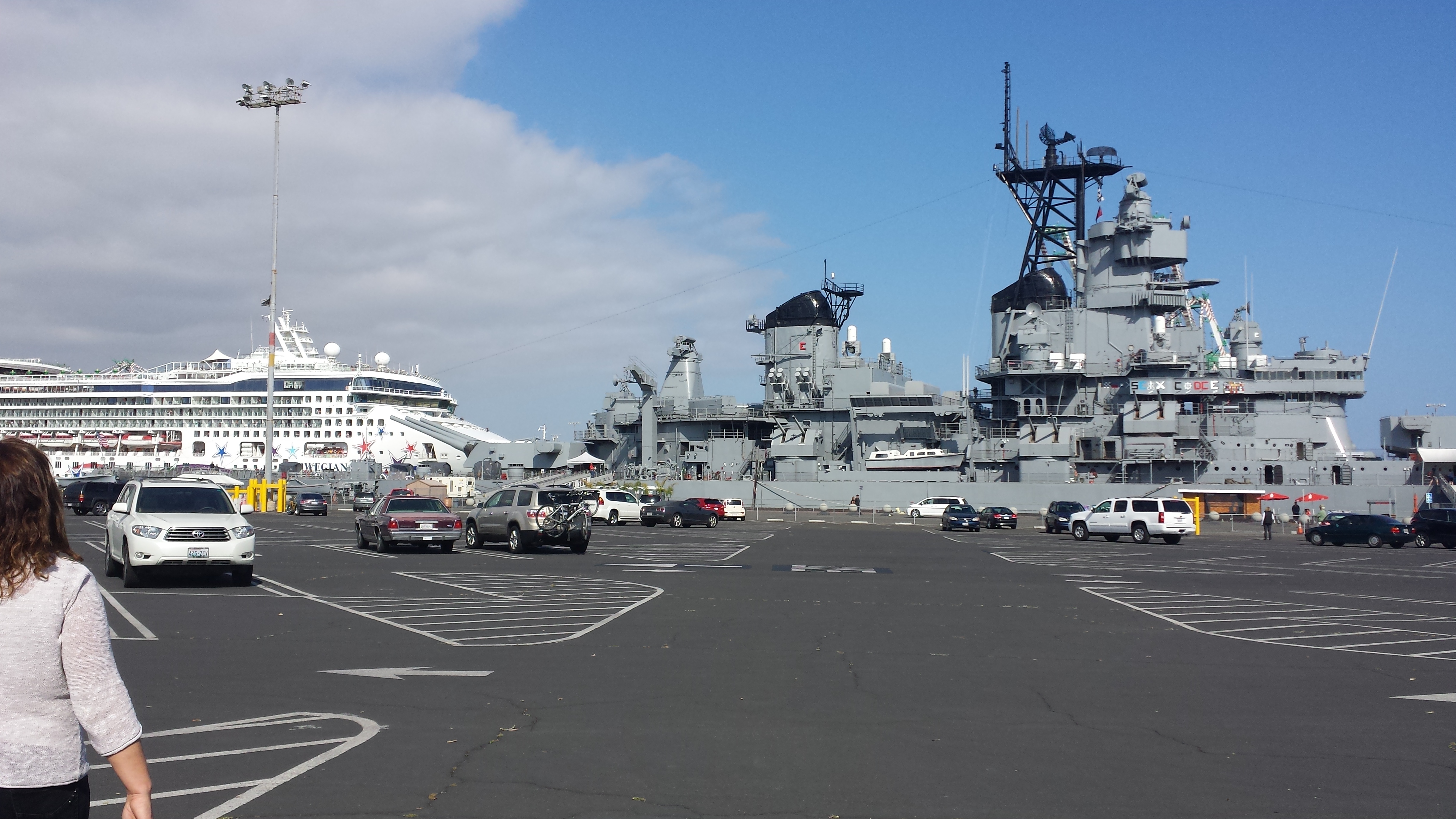
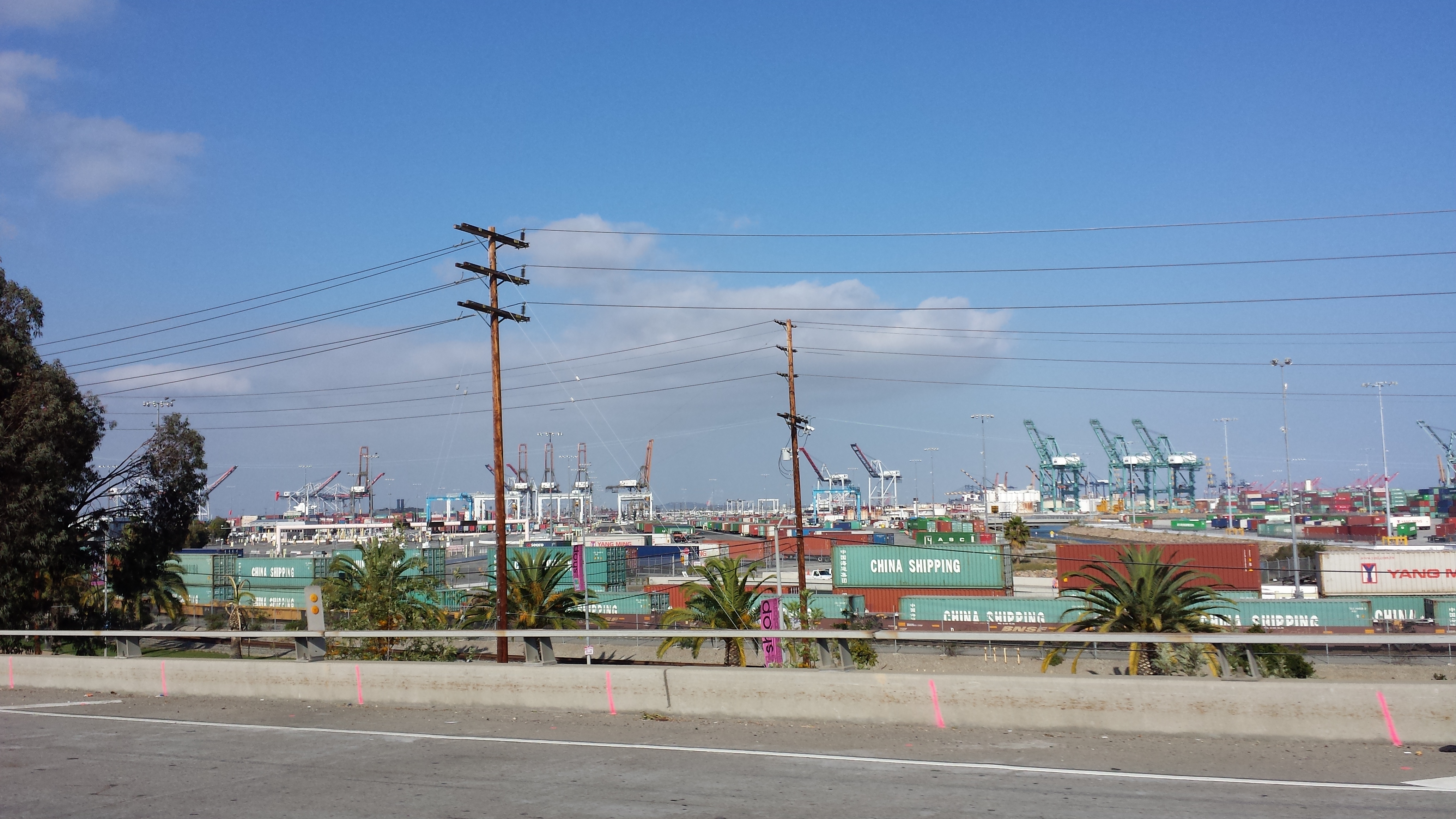
I wish I had been able to grab a picture of the Vincent Thomas Bridge which is a bit of the technological sublime – this amazing span of green metal soaring above canals and containers and cranes (and palm trees).  As it was, mediocre enchiladas and fajitas were followed by a walk alongside the canal and although we couldn’t get very far, we did see the warship-museum, the cruiseship, and a container-ship unloading:

20140413_160618


The ship was a Hatsu ship, Hatsu Courage I think, which is German-flagged and owned by the Taiwanese Evergreen Line (whose green containers should be familiar to people and whose first lines, Wikipedia informs me, were to the Middle East).

I think it was rather appropriate that both a cruiseship and a warship stood end to end there, across the canal from the containership.  The cruiseship was nowhere as HUGE as some of the ships I had seen in the port of Barcelona which towered high -around 10 floors or so- above the water.

20140413_161108

The warship-museum and the cruiseship were much easier to get to on foot than the containership, incidentally.

Posted in Allan Sekula, infrastructure, logistics, militaries, political economy, ports, transport | Leave a comment

Piracy and Counter-piracy

There is a kind of romance around piracy.  It is the romance of anti-authority figures and of a life lived not just in the margins but outside the boundaries.   Just think about the masses of novels and films about piracy and the scholarship (and I will eventually write about Marcus Rediker’s extraordinary work).  Or think about Pirate Jenny…  Here, sung by Lotte Lenya:

There is something about her high nasal voice and the pauses between verses… Something about the lyrics written by Bertolt Brecht

And a ship with eight sails,
And with fifty canons,
Will raise up her flag…

And by noon the men will come by the hundreds,
And into the shade will step,
And they’ll catch any man who steps out the door,
And put them before me in chains,
And they’ll ask me “Which one’s should we kill?”
And this afternoon it will be silent at the ports,
And when they ask me who must die,
You’ll hear me say “All of them!”
And when the heads fall I’ll say “Whoops!”

And when Nina Simone sings it – with her references to the “black freighter”which makes you think of all the ways she appropriates the song for the struggle of African-Americans in the US:

And just for the hell of it, before I move on, the Dresden Dolls doing a pretty fabulous version:


***

But of course there was an imperial discourse around piracy, spun out of London, which saw the pirates as invading the turf of the imperial navies:

or worse still, they were political actors who had to be renamed as pirates and outlaws -much like guerrillas and revolutionaries being called  bandits and outlaws- in order for them to be more easily made the objects of imperial law.  In the Middle East, any seafaring peoples who disrupted British trade routes, who attempted to collect customs or taxes on the goods leaving from or going to India, were dubbed pirates.  I recently read a novel about one such character.  Though it wasn’t a literary masterpiece, and it was so very obviously written as an allegory of today’s Qatari politics (and its publication was supported by the Qatar Foundation), it did give something of a flavour of what it must have been to try and sail the seas that the British considered their own.

That is why in Rose George’s otherwise fantastic and fabulous book the chapter on the Somali pirates is so deeply problematic.  Perhaps the fact that she embedded with a NATO anti-piracy ship has something to do with it too.

Anti-piracy is now big business.  Not just in the Indian Oceanoff the coast of Somalia– but also in the Malacca Strait.  Even Erik Prince, of Blackwater fame, has gotten into the game.  From his hideout in Abu Dhabi, he has set up a company that provides private protection services for logistics firms operating in the Gulf of Aden and the waters off the coast of East Africa.

But I return to the wonderful Dead Water by Simon Ings, about which I wrote earlier:

Modern piracy has less to do with the ships themselves than with the blizzard of paperwork through which they sail.  You can steal a ship with the right notarized form.  You can operate a ship under the noses of its owners eight month of the year and no one any wiser.  With the kinds of profits you can make, you can afford to hire and pay the crew you’ve ‘captured’.  It’s a white-collar crime now, as abstracted in its way as the shipping industry it feeds upon.  Most hijackings aren’t reported.  Most ships are returned without a ransom.  Why steal a boat when you can borrow it?  Nab a ship, use it to shift a drug cargo across the China Sea.  Or don’t handle anything illegal: just lease the ship out to some desperate import-export hack with a letter of credit about to expire.  When you’re done, hand the ship back to the owner with a nod and a wink.  The less the company bemoans the seizure of its ship, the more affordable its insurance premiums, so nobody says anything.

[…]

Professional, multinational piracy runs under the surface, right across the Indian Ocean, from Karachi to Dar es Salaam, from Sur to Bandung.  It’s a desk-bound business, reliant on newfangled skills: cryptanalysis and ADSL, network administration, even AI.” (pp. 245-6)

So the image either of heroic young men or of the villainous brutes of Rose George are only that which can be seen at first glance and without looking too deeply…

Posted in finance and insurance, logistics, piracy, political economy, ports, readings, shipping conditions, ships, transport | Tagged , , , | 1 Comment

Sailing on dhows and working in the auto industry


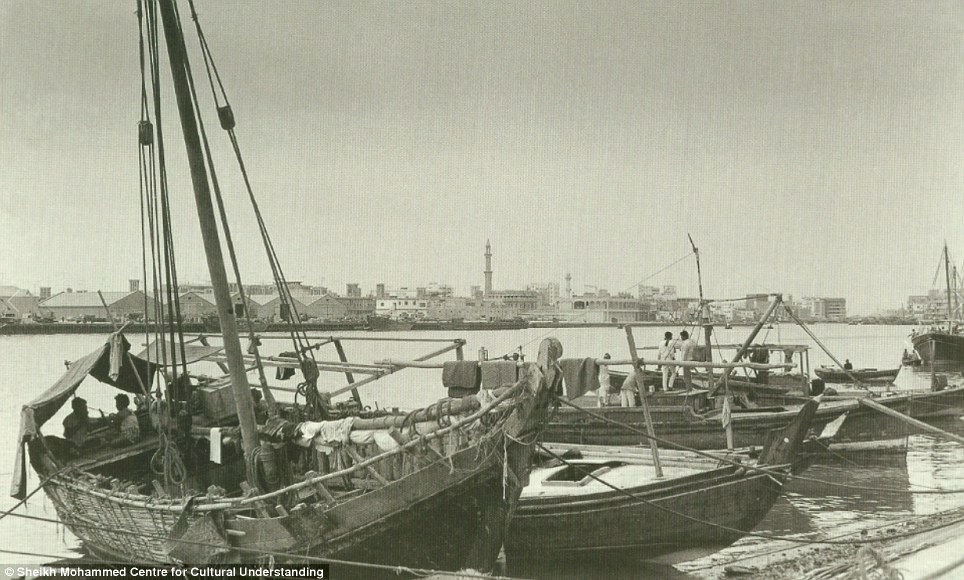
Dhow

A facebook friend sent me a URL to a blogpost which introduced Sons of Sinbad by Alan Villiers…  What struck me was the contention that the book was “probably the only work of western travel literature that focuses on the seafarers of the Arabian Peninsula.”

I bought the book and read it cover to cover on a plane (which itself feels rather apt) flying to California and another one flying back.  The book itself is lovely – a library copy of the 1960 reprint of the original 1940 book, it has that delicious musty paper smell and very thick pages. And dozens of amazing photographs.

Villiers is an interesting figure: an Australian son of a union organiser and someone who has sailed around the world (on a boat called The Joseph Conrad no less), he does trot out romantic orientalist cliches at every turn -in that TE Lawrence sort of way which sees Arabs as wise, timeless and courageous; as embodiments of “nature”.  More interestingly than Lawrence, Villiers, himself a sailor and the son of a union man, also sees them as profoundly skilled, competent, and capable.  He sees the hardship of work, and has a fabulous passage on the ways in which structures of debt binds sailors to the ship captains, in turn bound to the merchants who own the ships:

The sailors owed money to the nakhodas [the dhow captains], the nakhodas to the merchants, the merchants to other merchants, or the sheikh.  Working without any banking system, with insurance, usury, and even interest forbidden – at any rate in theory – by the Islamic law, the economic side of the port of Kuwait was a dark maze.  It was obvious, however, that the whole industry rested on a structure of debt. It was equally obvious that the nakhodas, though they imagined themselves to be the owners of their booms, were not the real owners at all.  The merchants owned them…  In their turn, the nakhodas owned the sailors, for the sailors were considered bound to any nakhoda to whom they owed advances…  The nakhodas were tried to the merchants, and the sailors to the nakhodas, though they were not slaves.  There was little slavery in Kuwait.  There was little need of it.  Slavery had become uneconomic.  It was better to own a man’s work than to own and support the man himself.  To own his work, you had not to support him.

The deskilling that comes with division of labour is yet to come, but the captain is bitter about the fact that the European regulations, competition, and violence have pushed him from deep-sea voyages towards coastal trade.  This sailing along the coasts itself has translated into a loss of knowledge (and lack of access to technology) that would make navigation in deep seas possible.  Villiers is nevertheless full of admiration about the encyclopaedic knowledge of the captain – of rocks, channels, banks, and coasts, or ports, sunk ships, and best places to cross, and the ability to sail through the monsoon.

The sailors work incredibly hard on the dhow – and Villiers exults the skill that goes into repairing the ship, but also in its day-to-day operation, and even in the tacking to wind.  He is attentive not only to the sailors, however, and also writes about the other people who work aboard the ship, including the cook.  Or the first mate:

I thought I had known something about ghosting vessels along in the catspaws and doldrums conditions, after all those grainship voyages and coaxing the Joseph Conrad through the Sulu Sea, but Hamed seemed to begin where I left off.  In conditions under which I could neither be sure that there was a breath of air stirring nor predict whence the next air might come, Hamed could get some progress out of the vessel.  He was a past master of this sort of sailing, and he had no mercy on himself or the crew.  For the slightest change or the most fleeting breath of air, he trimmed that huge lateen sail.  Hamed showed himself a splendid sailorman, and though at that early stage I could not appreciate all the moves he made (and indeed wondered about some of them) later I learned to appreciate him as a very fine sailorman indeed.

He also writes beautifully about the most horrific things (well, I am katsaridaphobic): “the most enormous cockroaches scampering –well, not exactly scampering, for they were too sleek and fat and undisturbed to move with any such unleisurely speed.  Rather then were scurvily ambling about the place, as if they owned it”.

But he nevertheless often makes grand (and orientalist) generalisations about Arabs or Suris or Italians or whatever  – and yet the specific people he writes about escape these generalisations of timelessness by simply breaking through the constraints of his orientalism through the sheer dint of living modern lives and in modern times.  One character, for example, is “a Yemeni sayyyid who was thinking of going to the Congo to collect some dues” who also happens to have been an “automobile worker in Detroit and had spent eight years in the stokeholds of ocean steamers.”  This fellow speaks no English or any other recogniseable language until his fellow travelers figure out that the language he speaks is actually Polish “which he had learned in Buffalo and Detroit… He had lived in Hamtranck, the Polish suburb of Detroit, and his fellow-workers must have all been Poles.” So not so much a colourful and exotic Bedu, but a modern immigrant who has worked in that quintessential modernist industry in that quintessential modern city of Detroit.

There is much else that I will be using in my own work: his description of the ports; the economies of shipping; the goods being shipped around; and the rather ineffective regulatory systems of the British and the Italians on the east coast of Africa are all amazing.   But one other thing about his book that absolutely shocked me was the recognition of how much the relations of East Africa and the Arabian Peninsula have changed in the intervening decades.

There is an incredible account where rickety ships filled dangerously with migrants -escaping war and famine- are seeking shelter and work in another place: but then in 1939, the desperate migrants were Arabs, and the port to which they were escaping in hopes of finding jobs and respite was Mogadishu.  Here is the short and terrible account:

Why, I asked Nejdi [the nakhoda], did so many Arabs wish to leave their country at once, in so poor a vessel?  Nejdi said there was trouble between Sharjah, the next port up the coast, and Dabai [sic], whence the boom hailed –political trouble, bad enough to culminate in a local war.  He left me to gather that perhaps these people from Dabai crowding that boom were fleeing from the war: but Hamed bin Salim said there was a famine round Dabai and all the Trucial Coast was so poor that anyone might gladly leave it, even in a sixty-foot boom crowded with two hundred people

Update [added on 18 February 2015]: I have just discovered that Villiers commanded the ship Moby Dick which was used as Pequod in John Huston’s version of Moby Dick scripted by Ray Bradbury, with Gregory Peck as Ahab.

Posted in finance and insurance, labour, Middle East, political economy, readings, seafaring, shipping conditions, ships, the sea, transport | Leave a comment

Robot ships

This Wired piece (which reads a bit like a PR statement from Rolls Royce) tells us that

autonomous systems [i.e. personless] are going to make their way into large vessels in the near future, and VTT and Rolls-Royce are already working on the first round of systems, which initially include remote controls that can be commanded from the bridge or on land.

“In terms of the technology required, operating a container vessel by remote control is already a real possibility,” VTT says in a release. “However, before fully unmanned vessels can be launched on seas, widespread public approval is also required.”

This fantasy -of a sterile industrial space- without humanity reminds me of Frederic Jameson’s reading of Capital

Capital is not a book about politics and not even a book about labor: it is a book about unemployment.

The reserve army of the unemployed and the robot – are they the highest stage of capitalism?

(h/t to Daniel Lowe for alerting me to this item)

Posted in capital accumulation, ships, transport | Leave a comment

Poems about ships

The poem has a whiff (or more than a whiff) of orientalism about it – but I love the last verse:

‘Cargoes’

Quinquireme of Nineveh from distant Ophir,
Rowing home to haven in sunny Palestine,
With a cargo of ivory,
And apes and peacocks,
Sandalwood, cedarwood, and sweet white wine.

Stately Spanish galleon coming from the Isthmus,
Dipping through the Tropics by the palm-green shores,
With a cargo of diamonds,
Emeralds, amethysts,
Topazes, and cinnamon, and gold moidores.

Dirty British coaster with a salt-caked smoke stack,
Butting through the Channel in the mad March days,
With a cargo of Tyne coal,
Road-rails, pig-lead,
Firewood, iron-ware, and cheap tin trays.

John Masefield

Posted in readings, seafaring, ships | Leave a comment

Beirut

Sitting on a rooftop overlooking container ships leaving the port of Beirut and sailing into the haze of the Mediterranean and other container ships powering towards the port from the west makes me VERY VERY happy I am going to be spending the next few years of my life working on ships, ports, and shipping.

 https://www.youtube.com/watch?v=J-AfD30sYt0

(thanks Zeina)

Posted in Middle East, ports, ships, the sea | Leave a comment

Seafaring Diasporas

Turner

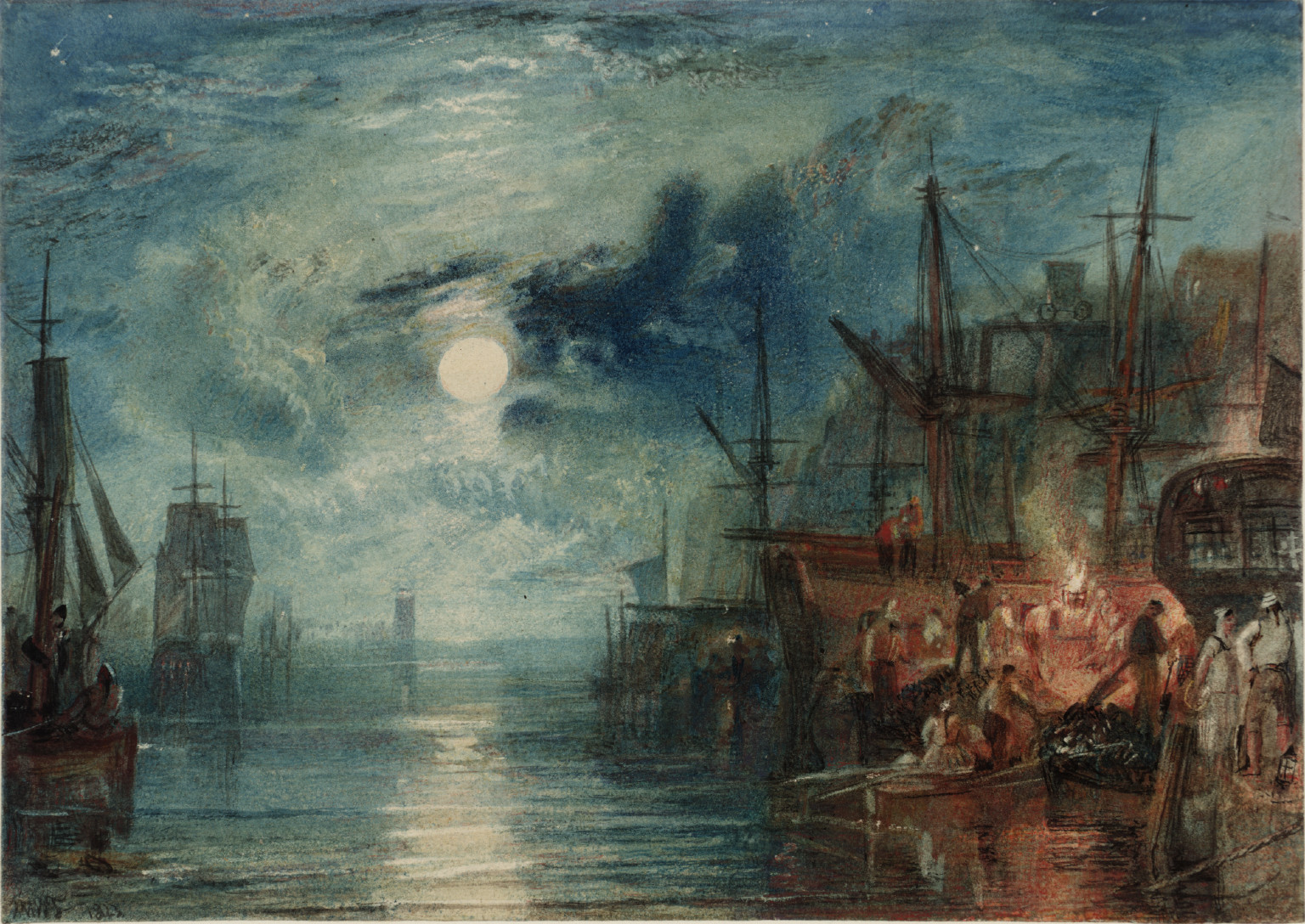
 Turner, South Shields, 1823

 My friend Isabelle mentioned the Yemeni community of South Shields to me (she also sent me that amazing Turner posted above).   Significant numbers of Yemeni seafarers, who used to work on British merchant vessels, settled in various coastal towns in Britain and established seafaring diasporas.   The Yemenis of Britain are apparently one of the oldest Muslim communities in Britain – and the mosque they built in Wales is Britain’s oldest mosque on these isles.  They presumably were first working in the port of Aden – which was so central to the trade in the Indian Ocean, although Aden has lost much of its wealth and is no longer the crucial trade node that it used to be.

And an interesting bit of trivia: Muhammad Ali, The King, had his marriage blessed in the Yemeni mosque in South Shields in 1977.

I like the idea of seafaring diasporas, of communities established across waters, on the coasts in a web of interconnection across the world…


Posted in Middle East, seafaring | Tagged | Leave a comment

London comes closer to the sea

Dubai Ports World runs London Gateway which will be competing against Felixstowe and Southampton to be the top container port in the UK.  Like many other DPW concerns, there seems to be an iron (or ham-) fisted determination to not let workers unionise – although protests seem to have stymied this effort for now.

I am hoping to visit the port at some point – but when I first heard about the Unite struggles with DPW at the Gateway, it reminded me of this piece by Iain Sinclair, the grumpy poet of London urban spaces.  The piece is a kind of a eulogy to Gravesend and Tilbury (on the occasion of Margaret Thatcher’s funeral), the first of which is on the other side of the Thames from the Gateway, and both are a bit further inland:

I’d decided to pay my respects in an unorthodox way, by time-travelling into the period of Thatcher’s pomp, when she occulted the light, alchemised the bad will of the populace and did her best to choke the living daylights out of the awkward, sprawling, socially coddled essence of metropolitan London. Hers was a tyranny of the suburbs operating from a position of privilege at the centre: she might have invested in a Dulwich retirement property, but she couldn’t sleep in it. In 1988 I began to explore the derelict deepwater docks of the Isle of Dogs and Silvertown (already floated as a future Olympic site) for a book called Downriver. Margaret Thatcher, in the person of the ‘Widow’, was a dark deity presiding over a nightmare version of England, channelling our worst impulses, our meanest prejudices, our fear of the alien. In those days the mark of the beast was clearly imprinted on the ravished terrain between the A13 and the river: discontinued industries, generic towers rising on the malign compost of the deregulated financial markets, crude surveillance systems protecting speculative retail parks. ‘Don’t you know there’s a war on?’ The repeated challenge as security guards questioned me at every imposed barrier. Thatcher was an abiding presence. Like the smell of the Thames: oil and river-rot and yellow mud. Along walls and embankments, the rabid slogans and anti-Thatcher curses were large and scarlet. In certain hideaway pubs, inscribed photographs in polished frames signalled a positive allegiance. Now, from the window of the empty train to Tilbury, there was nothing. No acknowledgment of funeral or legacy. Margaret Thatcher’s traces were visible in every new shed, in every mushroom estate under a pergola of pylons, but she was forgotten.

Like all new massive container ports the Gateway is far away from the city.  Such distance isolates the ports from scrutiny, from protest, from mass mobilisation.  As Sinclair writes,

The Railport was booming, but passenger transit and human immigration were over. All the platforms – spectacular ruins at the time of my last visit – were now enclosed, privatised, part of the secure container colony.

Like so much else in so much of the rest of London.

Posted in capital accumulation, infrastructure, labour, logistics, political economy, ports, shipping conditions, ships, transport | Tagged , , | Leave a comment

Interconnections

Dead Water by Simon Ings is the most fabulously dystopian novel about shipping, containers, ships, airships, tsunami, shipping, and dastardly deed that can happen when vast numbers of ships are circumnavigating the globes with vast numbers of containers on board.  One of his main characters invents containers:

The box does not sway, or ping, or flex, or buckle, or bounce.  It rings like a bell. […] The container’s bell-like reverberation sounds the death-knell for a small boy’s dream of running away to sea. From this point on there will be no more stevedoring, no more trimming, no more ordinary seamanship, no heave, no drag, no thrust, no groan, no weary back or throbbing arm or beer-parched throat, no barrel to roll, no crate to crack open, no cart to pull. The future’s robots now, and cranes, and serial numbers, and coordinates  (153).

As if this is not dystopian enough, the container is then put in the service of mysterious forces (I can’t really say more than that – the best part of the book is the slow unfolding of the secret at the heart of it and of container ships).  The thing is, that the dystopian vision above -of a sterile and human-free industry- has not been fully realised (yet), though shipping firms certainly would like to get rid of the “meddlesome component” of militant workers.

Ings has definitely done his research on the shipping industry and the shellgame they play.  One of the ships around which the novel pivots “is flagged in Tonga and mortgaged -through a Maltese holding company that exists only on paper as a mailing address in the capital, Valletta- to a Shanghai branch of Germany’s Bayerische Landesbank… That it’s operated by a company registered in Albania and Delaware, and maintained through layers of corporations in Austria and Lichtenstein…” (pp. 279-280)

The novel itself happens in a lot of different parts of the globe and has a global cast.  Something about the scale -which matches our lives and times- really appeals to me.  Plus, it has a few interesting passages about Dhofar.

If you really want to read about containers and the way they have changed the world,  the book to go to is Marc Levinson’s The Box.  It seems to me that Ings has also read it and some of my favourite parts of The Box also appear in passing in his novel.


Posted in capital accumulation, infrastructure, labour, literature, logistics, political economy, readings, ships, transport | Tagged | Leave a comment