The ship as the heterotopia par excellence

How wonderful is it that Foucault considers the ship the perfect heterotopia:

Brothels and colonies are two extreme types of heterotopia, and if we think, after all, that the boat is a floating piece of space, a place without a place, that exists by itself, that is closed in on itself and at the same time is given over to the infinity of the sea and that, from port to port, from tack to tack, from brothel to brothel, it goes as far as the colonies in search of the most precious treasures they conceal in their gardens, you will understand why the boat has not only been for our civilization, from the sixteenth century until the present, the great instrument of economic development (I have not been speaking of that today), but has been simultaneously the greatest reserve of the imagination. The ship is the heterotopia par excellence. In civilizations without boats, dreams dry up, espionage takes the place of adventure, and the police take the place of pirates.

Posted in empire, imperialism & colonialism, political economy, seafaring, ships, the sea | Tagged , | Leave a comment

Transport capital

There is a lot to chew on here, but this sentence really struck me:

“As for finance, there’s been no tendency for its executives’ pay to outpace that of nonfinancial executives. On the contrary: even during the bubble years of the 2000s, top 0.1% finance executives in public companies saw their pay rise by 52%, while nonfinancial executives’ rose 58%. The industries with the biggest pay hikes were not banks, but transport, restaurants, and wholesale trade.”

https://www.jacobinmag.com/2014/05/pikettys-fair-weather-friends/

Posted in capital accumulation, finance and insurance, logistics, political economy, transport | Leave a comment

“war, commerce, and transit”

“Let us have the courage to be crude: let us sweep the spirit of subtlety down the sewer along with the flags and the great warriors.” Paul Nizan

Paul Nizan’s star burned bright and brief.  He was a classmate of Jean-Paul Sartre‘s at École Normale Supérieure and a member of the French Communist Party who resigned his membership when the Molotov-Ribbentrop Pact was signed. He died not long after at Dunkirk.  But long before that, when he was 20 years old, disgusted with what he saw as bourgeois ennui and intellectual compromise and pervasive militarism, he got on a ship and went to Aden.

The fruit of that trip is a dense and beautifully crafted polemic, Aden, Arabie, which seesaws between acutely observed (and surprisingly light on orientalism) descriptions of the ports and the apparatuses of rule and commerce on the one hand and meditations on life, youth, travel and meaning which sound existentialist long before existentialism on the other hand. Speaking of which, half the edition I own, translated by Joan Pinkham and published in 1986, is taken up with a foreword by Sartre which is far too rambling and repetitive and coded to be anywhere as interesting as, for example, his foreword to The Wretched of the Earth.  Sartre does have this wonderful little anecdote in the foreword about how the two of them looked so much alike that people often mistook them for one another. Sartre describes Nizan thus

I could have drawn his portrait: medium height, black hair.  He had a cast in one eye, like me, but in the opposite direction, so that it was agreeable. My divergent squint gave my face the appearance of an unplowed field.  His eyes converged, giving him a mischievous air of abstraction even when he was listening.  He followed fashion closely, insolently.  At seventeen he had his pants cut so tight around the ankles that he had trouble pulling them on.  A little later they flared out into bell-bottoms that hid his shoes.  Then, all of a sudden, they changed into golf knickers that came up to his knees and stood out like skirts.  He carried a Malacca walking stick and wore a monocle, little round collars, and wing collars.  He traded in his steel-rimmed glasses for enormous tortoise-shell spectacles which, with a touch of the English snobbery that afflicted all the young people of the time, he called his “goggles”.  I tried to emulate him, but my family organized an effective resistance and even went so far as to bribe the tailors (pp. 18-19)

Sartre wrote this preface in 1960 and the text echoes the angry rhythms of Nizan’s text, his jeremiad against capitalism, empire, European bourgeoisie, and a life that has lost meaning.  Nizan decided to leave École Normale -which he described as a “ridiculous and, more often, odious thing, presided over by a patriotic, hypocritical, powerful little old man who respected the military” (p. 61)- and run away to Aden.  Why Aden?  I imagine the romantic notion that he was following Rimbaud’s footprints may have had something to do with it (incidentally, Rimbaud worked for a coffee exporter in Aden, intermittently between the years 1880-1891).

Aden, Arabie begins, wonderfully, “I was twenty. I will let no one say it is the best time of my life” and proceeds from there with an acerbic -no, angry- attack on the establishment.  So much of the world he describes, its affects, practices, and senses, feels familiar:

On awakening in the morning, each man finds himself confronted with the great disorders of the time, reduced in scale to the petty dimensions of a personal anxiety.  We have within us divisions, alienations, wars, debates.  We were told we were living in the age of the guilty conscience, but that did not keep us from fearing for our lives, from suffering from the mutilations that awaited us.  After all, we knew how our parents lived -in awkward misery, like cats with a fever, like seasick goats. Where was our sickness?  In what part of our lives? We knew one thing: men do not live as men should.  But we still did not know the elements of which real life is composed; all our thoughts were negative.  The celebrated philosopher Alain did indeed tell us: “To think is to say no.” But only the Spirit of Evil says no eternally.  The time will come when the mind will no longer fear the things it believes in; then man will be ashamed to have remained on the defensive so long (p. 65).

And then a rejection of the great men, of “God and his priests”, of even the pleasures of Paris.  And of irony:

Then there was irony.  Irony was proper and respectable, like a notary.  At least it was patriotic, since it conformed to the national tradition: reticence is the virtue of these little Frenchmen. Irony frightens no one. It is not so negative as it seems, it will not prevent you from making a career for yourself that will be applauded in the best society.  You can climb to the top wearing the label of “skeptic” that has been so honorable since Montaigne and Huet (p. 71).

And then he has a fabulous description of orientalism:

… we had been taught to think of the East as the opposite of the West.  So once it was established that the collapse and decay of Europe was a simple, inescapable fact, the renaissance and flowering of the Orient became a fact equally obvious .  For Europeans, the Orient held salvation and a new life.  It had medicine for our ills, and love to spare.  We made free use of false analogies with antiquity and drew on the official history of religions. We endowed Asia with all the human virtues that had been gradually disappearing from the West over the last three hundred years, virtues that were no longer demanded anywhere outside the agony columns of the English dailies.  The spirit of civilization hovered over India, China seemed more marvelous to us than it had to Marco Polo.  Who was there to give us good, hard reasons for being interested in Asia: the strikes in Bombay, the revolutions and massacres in China, the jailings in Tonkin?  Good, human reasons, instead of a reason like Buddhism.

There was also America.

Europe, with its meager portion of land, poor in men and oil, lacking in events, seemed to be an old and dying woman between two heroes: Asia, the hero of wisdom, and America the hero of power (p. 73).

So, he, seduced by the kind of love of seafarers bred in the French through “compulsory education” decides to travel by sea to Aden, because “there are roads, ports, railway stations, there are other countries besides the familiar kennel: all one has to do is not to get off at his subway stop one day” (p. 77).  He recognises that such travels to the colonies are often the beginning of colonisation, with missionaries and military men and men of commerce following:

…as soon as the land has been explored, surveyed, and registered, the Europeans begin to exploit it… The paradises turn out to be commercial enterprises in cobalt, peanuts, rubber, and copra; the noble savages are clients and slaves. the priests of all the white gods have set about converting these idol-worshipers, these fetishists (p. 75).

In October 1926, his boat departs from “a dock on the Clyde, at Paisley” and goes “down the Irish sea, past Lundy Island… amid the gales and squalls of the season.”  Through the Straits of Gibraltar and past Malta and Crete, through Port Said and the Suez Canal, through the Red Sea, with a night at Port Sudan. “On the morning of the thirty-fourth day, a violet pyramid lifts itself up on the back of the Indian Ocean.”  The violet pyramid is the massive mountains behind Aden.  In Aden, he ends up staying -predictably enough- in the European quarter which he describes in this way:

[European] Aden was a highly concentrated image of our mother Europe, it was Europe compressed. A few hundred Europeans huddled together in a space as cramped as a prison ship, five miles long by three miles wide, reproduced on a small scale, but with extraordinary precision, the designs formed by the lines of relationships of life in the western countries. The Orient reproduces the Occident and is a commentary on it (p. 110)

His descriptions of the main parts of Aden are interesting, though surprisingly (given his awareness of orientalist representations) sometimes shade into orientalism  (and in a couple of shocking moments, into racism).  But he has an amazing turn of phrase:

The whites and the Hindus hiding in their hygienic lairs work under the wings of fans, in offices where silent natives walk barefoot among the tables, and the typewriters endlessly inscribe a small number of black signs.  The life of the Europeans consists of combining these signs, breaking them down,and recombining them. It is a game for madmen (p. 95).

And the masters of the port and of the city, of course, are the oil companies:

In the great, open port between Steamer Point and Maala, there is tremendous activity.  The liners of the P. and O. and the Messageries Maritimes clear a path for themselves through a tangle of peeling freighters, tankers, motor boats, and Arab boutres.  The boutres are like caravels, with beautiful blue or green forecastles whose reflections crawl on the water like serpents.  When the liners are in port, the colonials go abroad – the women head for the hairdresser’s and the men for the bar.

The oil flows through big, jointed pipes that run just below the surface of the water, like sea serpents – the only authentic ones.  The oil feeds the ships’ tanks.

Not so long ago, Aden was a coaling station. Oil brought with it offices, docks, the black tanks of the Anglo-Persian and Asiatic Petroleum, and intrigues that rouse the emotions of the little native potentates who have become sellers of oil and buyers of gasoline for automobiles.  A little war for concessions is spreading all around.  So Aden still conforms to its destiny.  In Arabia, the smell of leather, and the smell of oil that grows more insolent every month, are replacing the smell of the coffee from Sana and Harar.  But this change of products has not changed the human consequences.  One reads in Reclus: “To extend coffee plantations, European wars have been undertaken, vast territories have been conquered in the New World, in Africa, and in the Sunda Islands; millions of slaves have been captured and transported to the new plantations; a revolution has been accomplished, entailing consequences incalculable in their complexity, in which good and evil are intermingled, in which frauds, warfare, oppression, wholesale massacres go hand in hand with commercial enterprise.”

The warehouses of Maala and Somalipura are stacked up to their roofs of corrugated iron with sacks of sugar and rice, bales of leather and goat hides, and cases of oil stamped with a bear or gazelle. The Arab laborers sing at their work in these roasting sweat-boxes; without the rhythm of work songs they would forget what to do.

The wisdom of nations approves of all this scheming and contracting and forcing, all this profitable slavery (p. 96).

He draws sketches of local groups at odds with one another, and of European “men of action” who are ridiculous in the intercourse of their commerce:

To handle rates of foreign exchange, to hover over the value of the thaler and the pound as if it were the temperature curve of a sick child, to make a ship move faster in order to secure a cargo – these empty dreams constituted his idea of action… (p. 103).

These men were replaceable parts of an invisible mechanism that slowed down on Sunday, because of religion, and was periodically jammed by the violent accidents of economic crisis.  This whole mass of machinery, bolted together, without safety valves, vibrated like a structure of sheet iron. In every city in the world there are men watching and waiting for the day when the cover will blow off and the steam will explode.

Grouped under names of firms, they were perpetual victims of the warlike rituals of international trade (p. 111).

He takes trips inland to Lahej, where the Sultan, knighted by the British Queen, and secure “in the shadow of the military airplanes of the English” (p. 120), exploits the scarce water and the labour of tends of thousands of men who, Nizan thinks, look like “the laborers I once saw coming out of the bauxite mines on the road to Aix-en-Provence,their bodies covered with red earth” (p. 120).  And another trip by boat to Djibouti, which he finds unbearably like Aden, except populated by southern Europeans, and with a brothel.  There  is no wisdom in Asia, but social classes in a war of commerce always already shading into violence, the naked violence of colonialism, exploitation and ennui.

He has already, midway through the trip, discovered that travel is not all that liberation, all that freedom he had imagine:

The so-called freedom of the seas is only absence. But oblivion is not another name for freedom. And freedom is all that counts: I must retrace my steps back. Back in Europe, on the quays of Glasgow where men did not have enough to eat every day (it was the time of the coal strike), I was looking for miracles, for events, for something that would be a break with the past and the promise of a real incarnation.  I was under the impression that human life could be discovered through revelation: what mysticism.  But the men of my age lived in the expectation of something -anything (p.85).

And he wonders: “Did I have to go Aden to seek out the secrets of Paris?” (p.132). “Arabia-France, Aden-Paris, Versailles-Lahej, the names of countries and cities are henceforth interchangeable” (p.147).  In the end, after a very disappointing aside about Arab fatalism (that confounds so much else he was written up to then), he goes back to France, and learns to become active.  He joins the French Communist Party – which he will leave a bit more than a decade later.

In the end, he sees the sea as a plaything of the masters: “For the masters of the French, the ocean is a reservoir of defenses, an excuse for guns,  submariners, and cruisers… France is the victim of dreams of impenetrability. Oh to have frontiers made of diamond and corundum!  But only, alas, these borders of water, granite, and shale.” (p. 145).  He has a stunning section about Homo Economicus which is straight out of Michel Foucualt’s College de France lectures.  And he writes this which feels very appropriate even today:

The French live out the days of their interminable lives like snails inside shells so heavy that they cannot cross the great deserts that separate them from action and thought.  With all the cunning of old men who hold annuities, they see to it that nothing happens among them.  Not even those encounters between automobiles bristling with machine guns that are the Americans’ last resort for social entertainment (p.148).

The book as a whole is one of the angriest and most densely polemical texts I have read and there isn’t a page I haven’t marked for a stunning phrase, an incendiary ideas, a beautiful articulation of something inarticulable.  I wonder why it has taken me so long to become acquainted with Paul Nizan.

Posted in empire, imperialism & colonialism, literature, Middle East, ports, readings, ships, war | Tagged , , | Leave a comment

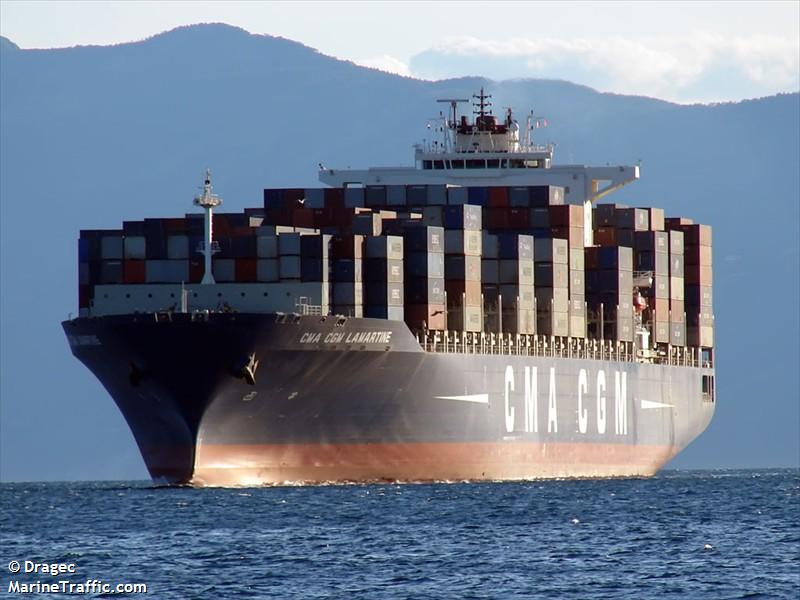
The ship

Come end of January 2015, I will be on this ship:

CMA_CGM_LAMARTINE

Posted in ships, the sea, transport | Leave a comment

Edward Said on Cavafy in Alexandria

In his Reflections on Exile, Edward Said has a lovely elegiac essay called Cairo and Alexandria, which is an ode to Cairo and a eulogy for Alexandria.  I love the bits that follow (and especially sympathise with the fear of consulates disappearing):

Her loneliness convinced me that Alexandria was in fact over: the city celebrated by European travelers with decadent tastes had vanished in the middle 1950s, one of the casualties of the Suez war, which drowned the foreign communities in its wake.  One of the few meaningful glances of the old Alexandria is a little quasi-monument to Cavafy, the great Greek poet and a former Alexandrian resident, that exists more or less secretly on the second floor of the Greek Consulate.  The British travel writer Gavin Young had advised me before I left to go to the consulate and ask to see the Cavafy room, but at the time I hadn’t paid much heed.  Since Alexandria boasts no easily available telephone directory (another sign of its abandonment), I was left to fend for myself when I finally recalled the conversation.  It took half a day to find the consulate, though it stands right across from the University of Alexandria Medical School in Chatby, a section of the modern city about a mile west of Montazah.

The consulate clerk, a cross Greek woman with better things to do than to speak to unannounced passerby like myself, told me I couldn’t expect to come in just like that.  When I asked why not, she was slightly taken aback, and then more amiably suggested that I come back in an hour.  I didn’t leave, for fear that the consulate might disappear; I parked myself on the staircase with the Keeley and Sherrard translation of Cavafy’s poetry.  After an hour I was shown to a spacious room in which the Cavafy memorial reposed, unused, unvisited, unconsulted, mostly uncared for.  In the bookshelves there were about three hundred volumes of French, English, and Latin works, many of them annotated by the poet, all of them handsomely bound.  In the center of the room were several glass cases exhibiting manuscripts, correspondence between Cavafy and other writers (including Marguerite Yourcenar),first editions, and photographs.  The bright young Egyptian attendant told that the small group of chairs and tables came from the Pension Amir, Cavafy’s last home in Alexandria.  Other visitors to the city have reported that when they went to the Pension Amir, they were approached with offers from people who had “Cavafy furniture” to sell, so one cannot know whether the pieces of greek Consulate belonged to the poet or not. Nevertheless, the memorial’s melancholy situation, hidden away in a city that has no other recollection of one of the greatest poets of our century, corresponded perfectly with what I had already discovered: that those few parts of Alexandria’s colonial past which have not disappeared completely have been consigned to decay.

I returned to Cairo by train the next day.


Posted in empire, imperialism & colonialism, Middle East, ports, quotations | Tagged , , | Leave a comment

“a seaman in exile from the sea”

Do you remember that haunting Conrad quotation from Heart of Darkness that says “The conquest of the earth, which mostly means the taking it away from those who have a different complexion or slightly flatter noses than ourselves, is not a pretty thing when you look into it too much.”  It is amazing and powerful, and then it is followed by this: “What redeems it is the idea only. An idea at the back of it; not a sentimental pretense but an idea; and an unselfish belief in the idea–something you can set up, and bow down before, and offer a sacrifice to”?

Conrad’s Lord Jim fully fleshes out this idea in its latter half.  There are morally driven imperialists and immoral, treacherous, villainous imperialists.  And the moral imperialists are manly and responsible and they rescue and love native women who tell them “go” but really mean “stay”.  The moral imperialists spend a lifetime repenting for their sins, and they willingly lay down their lives for their “native” friends (who, however good, brave and beautiful, can never match the moral imperialists).  The moral imperialists are “the visible, tangible incarnation of unfailing truth and of unfailing victory.”  And in the end, even if the native’s bullet kills the moral imperialist, it was actually the machination of the treacherous imperialists that has guided the bullet there. The engines of the story are always the imperialists.

But the story is not just that.  Conrad writes breath-taking prose.  His having been a seaman himself, and an exile, and someone who inhabits English only as a second home, all mean that there is a fullness to his sense of place and time on board ships, at ports, and among seafarers rarely matched in print.  And weirdly, this book is a book of two halves and while they are both beautifully written, the first half is far more interesting than the imperial morality play of the latter half.

In fact, Conrad is far less ambivalent about the white men who populate the story and their depredations -no matter their intentions- in the latter half of the book than he is in the earlier half.  Edward Said has written about Conrad’s Heart of Darkness that “Despite their European names and mannerisms, Conrad’s narrators are not average unreflecting witnesses of European imperialism. They do not simply accept what goes on in the name of the imperial idea: they think about it a lot, they worry about it, they are actually quite anxious about whether they can make it seem like a routine thing.”

And Marlowe, who is the narrator of Heart of Darkness, is also the narrator of Lord Jim, and it is in his voice that Conrad worries about empire and imperialism.  The structure of the story is a bit like a Russian doll, with stories within stories within stories, which is one way Conrad can at once write about empire, defend it, and disavow it.  The narrator of the story is going to always be unreliable because he is narrating Marlowe, who is narrating the story someone else told him,within which is yet another embedded story.  This nested story structure acts as an alibi for whatever is said inside the stories themselves.

As I read the latter half of the book – where Jim’s story is a rendering of the adventures of The White Rajah of Sarawak, James Brooke, I really just wanted to get through it.  Brooke had been an adventurer-imperialist who as part of a campaign to suppress piracy off the northern coast of Borneo was involved in atrocities against the natives there, and in fact destroyed the town of Patusan which gave its name to the village in which the moral imperialist, Jim, provides counsel to the local sultan.  There, Conrad writes, “three hundred miles beyond the end of telegraph cables and mail-boat lines, the haggard utilitarian lies of our civilisation wither and die, to be replaced by pure exercises of imagination,  that have the futility, often the charm, and sometimes the deep hidden truthfulness, of works of art” (251) The telegraph and the mail-boat, as the utilitarian instruments of commerce, and beyond them the romance of rule.  The adventure “season[s] with a pinch of romance the fattening dishes of his commercial kitchen” (204) and these noble adventurers are the core of moral imperialism.  They are the ones who “left their bones bleaching on distant shores, so that wealth might flow to the living at home.  To us, their less tries successors, they appear magnified, not as agents of trade but as instruments of a recorded destiny, pushing out into the unknown in obedience of an inward voice, to an impulse beating in the blood, to a dream of the future” (210).  In all, the latter half reads like the very imperial adventure stories and colonial romances that Conrad slyly dismisses in the earlier part of the book.

But the first part of the book -where we get Jim’s potentially fatal transgression on the Patna (a ship whose story is modelled exactly on the story of SS Jeddah) and his extraordinary sense of guilt is so much more likeable, so much more plausible, and of course, so much more about the sea, and ships, and the labour that the sea and  ports demand. Here he is on labour on board ships:

He made many voyages.  He knew the magic monotony of existence between sky and water: he had to bear the criticism of men, the exactions of the sea, and the prosaic severity of the daily task that gives bread – but whose only reward is in the perfect love of work.  This reward eluded him.  Yet he could not go back, because there is nothing more enticing, disenchanting, and enslaving than the life at sea.  Besides, his prospects were good.  He was gentlemanly, steady, tractable, with a thorough knowledge of his duties; and in time, when yet very young, he became chief mate of a fine ship,without ever having been tested by those events of the sea that show in the light of day the inner worth of a man, the edge of his temper, and the fibre of his stuff;that reveal the quality of his resistance and the secret truth of his pretences, not only to others but also to himself (50)

The hierarchies of race and status and class he sketches aboard ships feel revolting and real.  And what is striking is that while aboard ships whiteness guarantees a place at the apex of labour, the ships can be, are, owned by Arab and Indian and Malay owners.

And there is a way in which Conrad loves the ship as a place of homeliness and shelter.

There is something peculiar in a small [life]boat upon the wide sea. Over the lives borne from under the shadow of death there seems to fall the shadow of madness,  When your ship fails you, your whole world seems to fail you; the world that made you, restrained you, took care of you. It is as if the souls of men floating on an abyss and in touch with immensity had been set free of any excess of heroism, absurdity, or abomination.  Of course, as with belief, thought, love, hate, conviction, or even the visual aspect of material things, there are as many shipwrecks as there are men, and in this one [the atrocity that is the engine of the first half of the story] there was something abject which made the isolation more complete – there was a villainy of circumstances that cut these men off more completely from the rest of mankind, whose ideal of conduct had never undergone the trial of a fiendish and appalling joke (132).

And in this part of the story, in this half, Jim is not a White Rajah.  Strangely, this passage reminds me of Melville’s Billy Budd:

…he was outwardly so typical of that good, stupid kind we like to fell marching right and left of us in life, of the kind that is not disturbed by the vagaries of intelligence and the perversions of -of nerves, let us say.  He was the kind of fellow you would, on the strength of his looks, leave in charge of the deck – figuratively and professionally speaking (75).

But Billy Budd was never an imperialist and never responsible for the deaths of brown people.  I have also found a weird little piece of meanness towards Melville attributed to Conrad:

Years ago I looked into Typee and Omoo, but as I didn’t find there what I am looking for when I open a book I did go no further. Lately I had in my hand Moby Dick. It struck me as a rather strained rhapsody with whaling for a subject and not a single sincere line in the 3 vols of it. (Letter to Humphrey Milford, January 15 1907). 

I wonder if Conrad disavows Melville because of the ways in which Melville is far more open and worldly than Conrad would be (even if there is always a subcutaneous wish for this worldliness hovering under the pages of Conrad’s stories), or because Melville is seen as too much of a rival. Certainly stylistically they are worlds apart.  Conrad is a craftsman (perhaps in the way that a person not native to a language but with a sense of its poetry would be), and Melville is an exuberant exulter in language.  There is a tautness in Conrad (no matter how many digressions) and a kind of enthusiastic generosity of language and story and coruscating cascades of words in Melville. Said calls Moby Dick “undomesticated and unruly” and “wonderfully attractive, hypnotically turgid.”  And there is no question that Said loves Conrad’s writing and returns to him again and again and again.

Said also finds the two far more interconnected than Conrad would have allowed. Aside from their colonial and seafaring settings, Said comments on the “unaccustomed irregularity of their idioms” written in an English with “self-conscious, shifting, and unpredictable accents.”  And I love it that whereas Said often writes about the care Conrad takes in writing his stories, in writing about Melville, he sings about the “carelessness” that is “one of the main keys to [Moby Dick’s] imposing magnificence” (and god, how I love to read Said’s prose of criticism).

So I begin with Conrad, and end with our Lord Melville… to whom I must return.


Posted in literature, Melville, readings, seafaring, ships, the sea | Tagged , , | Leave a comment

“…We’re all exiles”

It’s at moments of misfortune that we remember we are all exiles (Total Chaos, p. 98)

I first read about Marseilles when I was around 10 years old and someone gave me the Persian translation of The Count of Monte Cristo.  Although Chateau d’If has become a tourist attraction on the strength of its prominence in that great adventure novel, what stuck with me were the brief harbour-side scenes of Marseilles.  And then I read (I am ashamed to admit) Désiréewhich for a romantic little adolescent living through a revolution unforgettably invoked another revolution. And although most of it took place in Paris, again it was the early scenes in Marseilles, the home of the French Revolution, that stuck with me.  And of course as kids just as we knew The International, we could hum The Marseillaise (even if I didn’t know the French lyrics).

And then I visited the city, and its reality, the fact that it has managed to resist the disneyfication that has been the lot of the always-too-twee Paris, makes it all the more attractive.  As my pals David and Clare say, Marseilles is the kind of city we think of when we all fantasise about a convivial urban life.  It is of course wracked by poverty, unemployment and racism and now by being captured by the horrifying Front National.  But it is a port city in the way it invokes port urbanism:  “ethnic” or religious homogeneity is not the first thing you think of when you see such port cities.  Belonging to the city in such coastal cosmopolitan urbanism often trumps belonging to the “nation”. And it is this tension -this cosmopolitanism which is also so very obviously embedded in a colonial history and a racist present- that makes Marseilles so fascinating.

And such tensions in sun-drenched Mediterranean need a poet, someone who can exalt the place without turning away from the stench of shit and decay and racism that can pervade even in the glory of sea-side living.  That eulogist is Jean-Claudi Izzo who died in 2000 at the age of 54, having begun writing his famous trio of noir novels about Marseilles only after he had turned 50 (thanks Elliott for introducing me to him).

I have a theory (perhaps half-assed) that in the global North, detective (and other “genre”) novels can be far more directly political than ostensibly “literary” novels (and I hate these generic distinctions, but let’s stick to them since the force of commercial categories seems to also carry into reviews, appreciation, etc).  This is partially because “genre” novels are impelled forward by plot and this very forward-moving force allows for politics to not just act as background but as the stuff of the story itself. Even more important, the fact that genre fiction is not subjected to a dressing-down by “serious” critics who love nothing more than to scorn overt expression of politics in novels, gives some breathing room to political authors to write politics into their detective fiction.

On this count, Izzo doesn’t disappoint.  His trio of Mediterranean noir novels, Total ChaosChourmou, and Solea, sketch anti-Arab racism, police brutality, postcolonical melancholia, the inexorable rise of the National Front, and the embeddedness of Mafiosi in global economies in a gritty, direct and affecting way that pulls no punches and doesn’t feel didactic.  Beneath the coruscation of Mediterranean waves, the feeling of sunny sweaty heat, the mistral, an intense love of amazing Marseillaise food (not just Provencal but also North African, Italian, and Spanish), music (including rai, reggae and Arab hip-hop), and beautiful women, lie vicious places of darkness in which those who have power step on the necks of those who don’t.

And amidst, around, above, beneath it all is the sea.  Izzo writes about the sea as both the transcendental sublime, and as a real place of work, rest, leisure, and exploitation – and of  concrete, stinking, real-world death.  And sometimes both at the same time (“I’d never gone to the sea on a freighter. I’d never sailed to the other side of the world. I’d stayed here, in Marseilles.  Loyal to a past that didn’t exist anymore” Solea, p. 71).

He has a sense of how the work in the ports happened, happens and will (or no longer will) happen.  Izzo writes about an immigrant who came to Marseilles in the early 20th century:

He was twenty, and had two of his brothers in tow. Nabos -Neapolitans.  Three others had gone to Argentina. They did the jobs the French wouldn’t touch. His father was hired as a longshoreman, paid by the centime. ‘Harbor Dogs,’ they were called -it was meant as an insult.  His mother worked packing dates, fourteen hours a day.  I the evenings, the nabos and the people from the North, the babis, met up on the streets. They pulled chairs out in front of their doors, talked through the windows.  Just like in Italy.  Just like the good old days (Total Chaos, p. 21).

And this is the port of the future:

Euroméditerranée was supposed to  be the “new order” for Marseilles.  A way for it to return to the international stage, through its port.  I had my doubts. The Brussels technocrats who’d concoct the project were hardly likely to have the future of Marseilles at heart.  They were only interested in regulating port activity.  In changing the face of the Mediterranean between Genoa and Barcelona.  But in Europe as a whole, the ports of the future were already Antwerp and Rotterdam.

We were being tricked, as always.  The only future being mapped out for Marseilles was to be the leading port for fruit in the Mediterranean.  And for international cruises.  That’s what the current project was basically looking toward.  A huge construction site was rising in the eastern harbor basin, an area of half a square mile.  A business park, an international communications center, a teleport, a tourism college… A godsend for the construction industry (Chourmo, p. 210).

He has acute descriptions of the legacy of colonialism.  One of his baddies, a National Front thug

was born in Algeria.  He joined the paras very young, and soon became an active member of the OAS. In 65,  he was in Tixier-Vignancourt‘s security team. When his man did so badly in the election, he turned away from official activism.  He went back to the paras, then became a mercenary.  Fought in Rhodesia, in the Comoros, and Chad.  In 74, he was in Cambodia, as a military advisor to the Americans fighting the Khmer Rouge.  After that, Angola, South Africa, Benin. He fought alongside Bechir Jemayel’s falangists in Lebanon. […] I had known guys like him in Djibouti.  Cold-blooded killers. The whores of imperialism. Its lost children.  Let loose in the world, full of hatred for having been the ‘cuckolds of history,’ as Garel,my chief warrant officer, had said one day. (Total Chaos, pp. 169-170).

And the portraits he draws of the desperately impoverished northern suburbs into which the North African immigrants are consigned are vivid, acute, full of rage.  His Arab characters are not condescended to.  There are no uniformly good collective categories of peoples, at least not on the basis of place of origin, though there are uniformly bad collective categories of bad people. He judges collective categories, if at all, based on politics and profession: National Front or Mafia thugs are bad; the police are bad more often than honest; the bar-keepers are all good. His good characters are sympathetic and feel real.  And Fabio Montale, his protagonist, is a sea-loving, womanizing, cynical, drunken gourmand who has persuaded me that I need to visit Marseilles again.


Postscript – I forgot to add that in recent history what made Marseilles a major Mediterranean port was the opening of the Suez Canal… The connections are interesting and to be pursued later.

Posted in infrastructure, logistics, ports, readings, the sea | Tagged , | Leave a comment

Muslim Pirates

Pirate Utopias is a strange little book – at once a bit disappointing and a portal to further discovery.  The concept behind it is fabulous enough (about which more below) and the blurbs on the back -by Christopher Hill, Marcus Rediker, and Peter Linebaugh- give one whiplash until you read them closely and they all hold something back.

Let’s get the disappointment out of the way: first, most of the story is predicated on a huge amount of (sometimes totally wild) speculation with very thin evidence.  Second, the author seems to project his own particular predilections unto the story.  So a story about North Africa tends to focus disproportionately on Christians who have converted to Islam (Renegados), which is what he seems to have done at least for a while, and at least to some soft sufi variant.  And a few oddly out-of-place pages on pederasty.

So the author is Peter Lamborn Wilson (1945) also known as Hakim Bey, a New Yorker best-known as the anarchist theorist of Temporary Autonomous Zones.  He seems to be a cantankerous sort and a self-declared Luddite (at least some of the time) and has a utopian vision of places where autonomy and equality and freedom of an individual sort allow for a temporary collective liberty.  And a pirate republic made of Muslims and Christians and Renegados, off the Atlantic coast of Morocco and in thrall to none (including the Ottoman Sultan) seems a kind of Temporary Autonomous Zone.

The disappointments aside, the book acts as an introduction to two dozen existing works of history quoted extensively and to a great deal of fascinating and (to me) unknown history.

Did you know that the term “Sally Rovers” came to name the pirates roving the seas, but based at the Salé (today’s Fez) and that these pirates had a self-declared republic?  Or that the Ottoman fleet ruled the Mediterranean under the admiral of the fleet, Hayreddin Barbarossa?  We have heard about the sack of Baltimore in Ireland by the Moors, but did you know that Murad Rais, the corsair captain was actually a Renegado of Dutch origins?  And better still Murad Rais’s son settled in Brooklyn and raised hell there?

But what the book also does is to make you want to know more.  And digging brings out

For example, We all know that the first US military intervention was against Tripolitania and because US-flagged ships but didn’t know that this victory was the seed of which the US Navy grew (to mix metaphors).  A fascinating history of the US Naval Academy (the 2006 doctoral thesis of William Paul Leeman, titled The Long Road to Annapolis: The Naval Academy Debate and Emerging Nationalism in the United States, 1775-1845) recounts how the need for a “naval force, adequate to the protection of the commerce of the United States against the Algerine corsairs” was the basis of the US Congress establishing the US Navy.

When Thomas Jefferson deployed a naval squadron to the Mediterranean in 1801 to deal with the Barbary pirates, one of the purposes of the squadron was “the instruction of our young men so that when their more active services shall hereafter be required, they may be capable o f defending the honor o f their Country.”

Incidentally, this same carefully research historical account also indicates that the establishment of the Corps of Artillerists and Engineers at West Point (to eventually fold into the Military Academy) was also bound up with the necessity for developing engineering skills in order to build fortifications against both native Americans and against potential attacks by the naval forces of Britain and France.

And of course, any database of academic journals reveals the ways in which the discussion of the Barbary Pirates ended up being pulled up in support of intervention or legal innovation in dealing with Muslim or Arab “terrorists” after 2001.   And when Somali piracy came to be constituted as a threat to shipping lanes, the Barbary Pirates were once again invoked in setting up the security apparatus of anti-piracy in the Indian Ocean and the Gulf of Aden (see for example this US Army Combat Studies Institute monograph [PDF] on historical piracy trends).

But I was really struck by Wilson’s story about the Renegades and the politics of ransom and knowledge production that they were implicated in.  There is a stunning doctoral thesis out there, researched by Daniel Bernardo Herhsenzon and titled Early Modern Spain and the Creation of the Mediterranean: Captivity, Commerce, and Knowledge (University of Michigan doctoral dissertation, 2011) which draws on archives in Spanish, Hebrew and a few other languages to tell us about the role these Renegados and other captives played in the transmission of information and knowledge across and throughout the Mediterranean:

traversing the sea, captives – Muslim and Christian; captured, ransomed, or runaways – played an instrumental role in the production and circulation of strategic information and knowledge (applicable to questions of military defense, offense or conquest). They did so in five forms: (1) a few ex-captives wrote and published systematic treatises on the Maghrib: (2) captives warned their kin of corsairs’ attacks in the letters they sent home; (3) upon arrival at ports, captives were questioned about enemies’ plans and maritime strategic movements: (4) former captives compiled detailed, topographic urban narratives of Maghribi cities, which, often accompanied by plans and maps, pretended to point out the cities’ “Achilles” heels” – the key to conquests; and, (5) captives wrote long, detailed urban diaries during their captivity, chronicling the main political – local and international – events they had experienced.

Hershsenzon tells detailed stories of how the corsairs maintained a particular code of trans-thalassic behaviour.

On December 13th 1603, for instance, “a Turk entered the Divan [in the city of Algiers] with a letter in his hand asking revenge for his brother who was burned in the galleys of Spain; he (the burned brother) was a reis {a pirate captain} and his name was Caravali.” Everyone present became agitated and a consensus was formed – four priests should be burned as revenge for the Turk’s death. The next day, a larger Divan meeting convened. The corsairs, however, forming one of the parties represented at the Divan, unanimously objected to the revenge saying “if they would burn Christian [captives] every day, what would be of the [corsairs] roving the seas and often falling in the enemy’s hand.” The parties did not reach an agreement and left the matter unresolved.

It is a beautiful story and one can see why the pirate republic of Salé is a kind of utopia in which the calculus of safety in piracy trumps sectarian revenge and where decisions are made in council.  I wish a Middle East historian with command of Arabic and Dutch and Ottoman Turkish and Spanish would dig into this as well.  I can imagine there must be treasure troves at the Başbakanlık Osmanlı Arşivleri.


Posted in Middle East, piracy, ships, the sea, war | Tagged , | Leave a comment

The Brooklyn Docks

Elia Kazan’s On the Waterfront (1954) is often ranked among the greatest films made in the US.  I had seen it when I had been very young but, because of a friend’s suggestion, recently reread the script.  I was rather shocked to find that it is a film that celebrates strike-breaking.  Yup.  Marlon Brando -the hero of the film- is actually a scab.

Turns out Kazan made this film in order to justify his naming names in front of the House Un-American Activities Committee.  And the film definitely bears the traces of this justification.  Strike-breaking and betrayal become heroic attributes.  And the union rep who is the villain of the story ends up being an archetype of so much Hollywood cinema: a mafioso (I really have to write about the US romance with protection rackets at some point), and an Italian mafioso at that.

The story around the film and Kazan, however, is actually much more interesting.  Kazan had originally co-authored a screenplay for a film about the docks with none other than Arthur Miller.  When Kazan named names to HUAC and Miller refused to do so their longstanding friendship was unraveled.  Kazan got another character who had also named names -a guy named Budd Schulberg– to finish the manuscript.  In some ways, this sidestory which is born of betrayal is far more interesting than the actual content of On the Waterfront.  But it gets even more interesting.

In response to On the Waterfront, Miller goes on to pen a two-act play, A View from the Bridge (1955) whose narrative judgments are a direct challenge to the justificatory arc of the Kazan film.  In this one, the protagonist, Eddie Carbone, does betray his Italian relatives, illegal immigrants who have sought shelter under his roof, but the betrayal is not celebrated as the heroic act of a beautiful Marlon Brando.  Rather, it is a horrifying and ultimately tragic choice – and the feeling of the inevitability of the tragedy and the devastating consequences once the betrayal happens are truly harrowing.

The play is fabulous in a lot of ways.  The biblical allusions -of a betrayal with a kiss for example- are subtly and beautifully done.  The direct challenges to stereotyping of Italians is fabulously sensitive.  The sexual politics of the play are astonishingly reflexive.  Its engagement with questions of what counts as masculinity are absolutely brilliant.  But what is truly the political response to On the Waterfront are the distinctions Miller makes between “law” and “justice”.  Not only are these distinctions subtly woven through the shape of the narrative, but they are declared from the very outset in the voice of Alfieri, who is the Greek chorus figure:

You see how easily they [the Italian longshoremen] nod to me? That’s because I am a lawyer.  In this neighborhood to meet a lawyer or a priest on the street is unlucky – we’re only thought of in connection with disasters, and they’d rather not get too close.

I often think that behind that suspicious little nod of theirs lie three thousand years of distrust.  A lawyer means the law, and in Sicily, from where their fathers came, the law has not been a friendly ideas sine the Greeks were beaten.

I am inclined to notice the ruins in things, perhaps because I was born in Italy… I only came here when I was twenty-five.  In those days, Al Capone, the greatest Carthaginian of all, was learning his trade on these pavements, and Frankie Yale himself was cut precisely in half by a machine gun on the corner of Union Street, two blocks away.  Oh, there were many here who were justly shot by unjust men.  Justice is very important here.

The play also has beautiful discussions of the backbreaking work of the longshoremen.  The wonderful little passage about unloading coffee ships -as opposed to malodorous and dangerous cargo- gives something of a flavour of the corporeal day to day experience of these workers.  The way allusions to ships appear everywhere -“my ship of hunger” for example- also firmly locate the play in Red Hook…

But the play also gets at the fundamental problem of capitalism.  The illegal immigration, the work women of a certain class do (secretarial work that is considered emancipatory), the organisation of communities around work.  And then this from Rodolpho, one of the Italian immigrants:

You think we have no tall buildings in Italy? Electric lights?  No wide streets?  No flags?  No automobiles?  Only work we don’t have.  I want to be an American so I can work, that is the only wonder here – work!

Which as I may have said before reminds me a bit of Frederic Jameson’s “scandalous” reading of Das Kapital – where he says that “Capital is not a book about politics and not even a book about labor: it is a book about unemployment”.

What Miller manages to do in the play is to beautifully wrap this all up in a story about love, jealousy and honour in their manifest forms.  There is a lesson in how undidactic the play is and yet it is such a response to Kazan with that last sentence of sorrow and disdain: “And so I mourn him -I admit it- with a certain… alarm.”


Posted in labour, literature, readings | Tagged , , | Leave a comment

pair of ragged claws

From Eugene O’Neill’s Long Day’s Journey into the Night (thank you Anya!)

EDMUND: You’ve just told me some high spots in your memories. Want to hear mine? They’re all connected with the sea. Here’s one. When I was on the Squarehead square rigger, bound for Buenos Aires. Full moon in the trades. The old hooker driving fourteen knots. I lay on the bowsprit, facing astern, with the water foaming into spume under me, the masts with every sail white in the moonlight, towering high above me. I became drunk with the beauty and the singing rhythm of it, and for a moment I lost myself–actually lost my life. I was set fee! I dissolved in the sea, became white sails and flying spray, became beauty and rhythm, became moonlight and the ship and the high dim-starred sky! I belonged without, past or future, within peace and unity and a wild joy, within something greater than my own life, or the life of Man, to Life itself! To God if you want to put it that way. Then another time, on the American line, when I was lookout in the crow’s nest on the dawn watch. A calm sea, that time. Only a lazy ground swell and a slow drowsy roll of the ship. The passengers asleep and none of the crew in sight. No sound of man. Black smoke pouring from the funnels behind and beneath me. Dreaming, not keeping lookout, feeling alone, and above and apart, watching the dawn creep like a painted dream over the sky and sea which slept together. Then the moment of ecstatic freedom came. The peace, the end of the quest, the last harbor, the joy of belonging to a fulfillment beyond men’s lousy, pitiful, greedy fears and hopes and dreams! And several other times in my life, when I was swimming far out, or lying alone on the beach, I have had the same experience. Became the sun, the hot sand, green seaweed anchored to a rock, swaying in the tide. Like a saint’s vision of beatitude. Like the veil of things as they seem drawn back by an unseen hand. For a second you see–and seeing the secret, are the secret. For a second there is meaning! Then the hand lets the veil fall and you are alone, lost in the fog again, and you stumble on toward nowhere, for no good reason! (He grins wryly) It was a great mistake my being born a man, I would have been much more successful as a seagull or a fish. As it is I will always be a stranger who never feels at home, who does not really want and is not really wanted, who can never belong, who must always be a little in love with death!

***

The last bit of that lovely long passage reminds me of this:

I should have been a pair of ragged claws
Scuttling across the floors of silent seas.


Posted in quotations, readings, the sea | Tagged , | Leave a comment